Performers
Programme
Accompanying programme
Concert introduction ‘before the museum’ with Klaus Albert Bauer
The styles of the three composers, one female and two male, who were either born or adopted Viennese, could not have been more different. In his First Symphony, Johannes Brahms drew on the traditions of Classical and Romantic symphonies. Many regard the work as a direct successor to Beethoven’s symphonies, not least because of the main motif of the final movement, which recalls the ‘Ode to Joy’ melody from Beethoven’s Ninth Symphony. 'Strange that every idiot hears the same thing,' Brahms is said to have grumbled.
Less than forty years after Brahms' First Symphony, the Viennese composer Johanna Müller-Hermann broke with the classical-romantic tradition in her 'Heroic Overture'. Chromaticism, bold harmonic shifts, and extremely colourful instrumentation reveal the influence of Alexander Zemlinsky and Franz Schmidt, her composition teachers, who were part of the late-Romantic school.
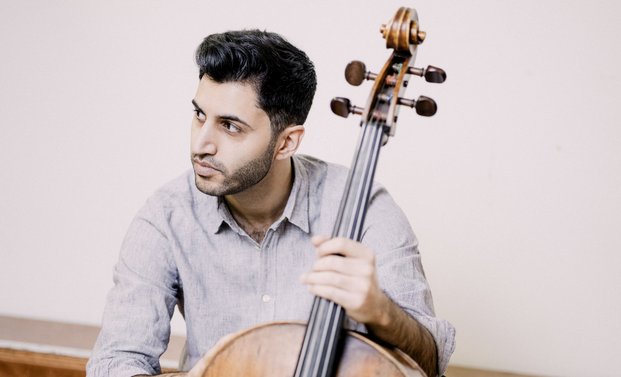
In his creative, daring and playful cello concerto, Friedrich Gulda defied all stylistic conventions. At times, he turns the cello into an accompanist for a jazz combo, at others he has it sing Alpine ballads, and at others still, it must listen to fervent alphorn and French horn sounds that seem like a caricature of the 'Freischütz' overture, before setting off on a madcap ride to a Bohemian polka. In this way, Gulda puts a cheeky, colourful cap on the cello, much like the ones he always wore in life and on stage.
(Frankfurter Museums-Gesellschaft e.V.)